

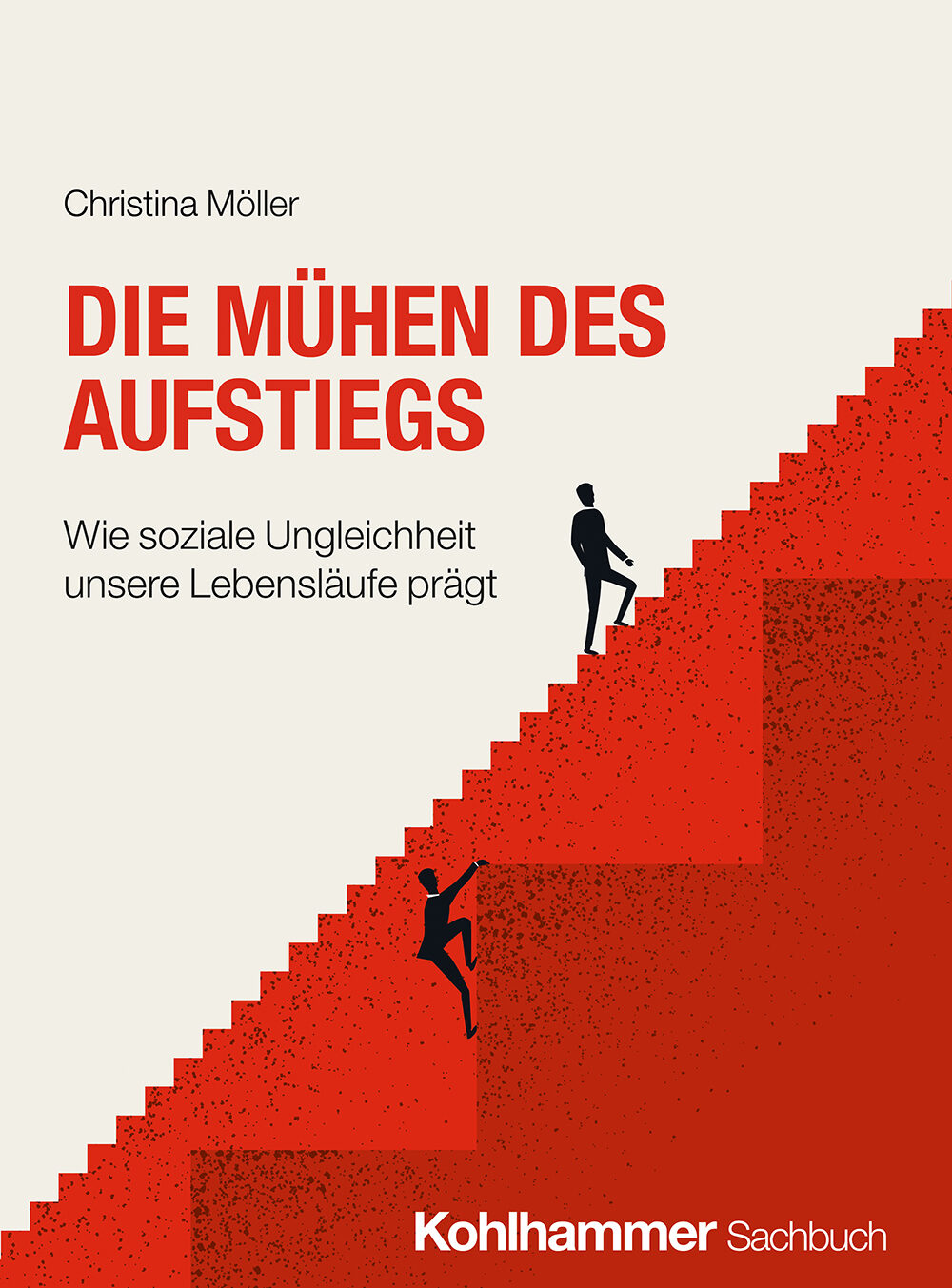
Professor Dr. Christina Möller has published a new nonfiction book titled *Die Mühen des Aufstiegs* (The Struggles of Social Mobility) on social inequality and educational opportunities. In an interview with fh-radar, the researcher at Fachhochschule Dortmund discusses why social background still determines educational pathways in Germany, what consequences this has for those striving to climb the social ladder, and why a fundamental overhaul is necessary.
Ms. Möller, you have been working on educational equity and unequal opportunities for social mobility in Germany for many years. Does it frustrate you that, despite all the debates, so little has changed for the better?
Christina Möller: Unfortunately, the opposite is true—the situation is getting worse. Germany now ranks just as poorly as the U.S. in terms of social mobility. This is a serious problem because social mobility has always been a major promise, and that promise is now rarely fulfilled. Educational inequalities play a major role in this.
How do you know that?
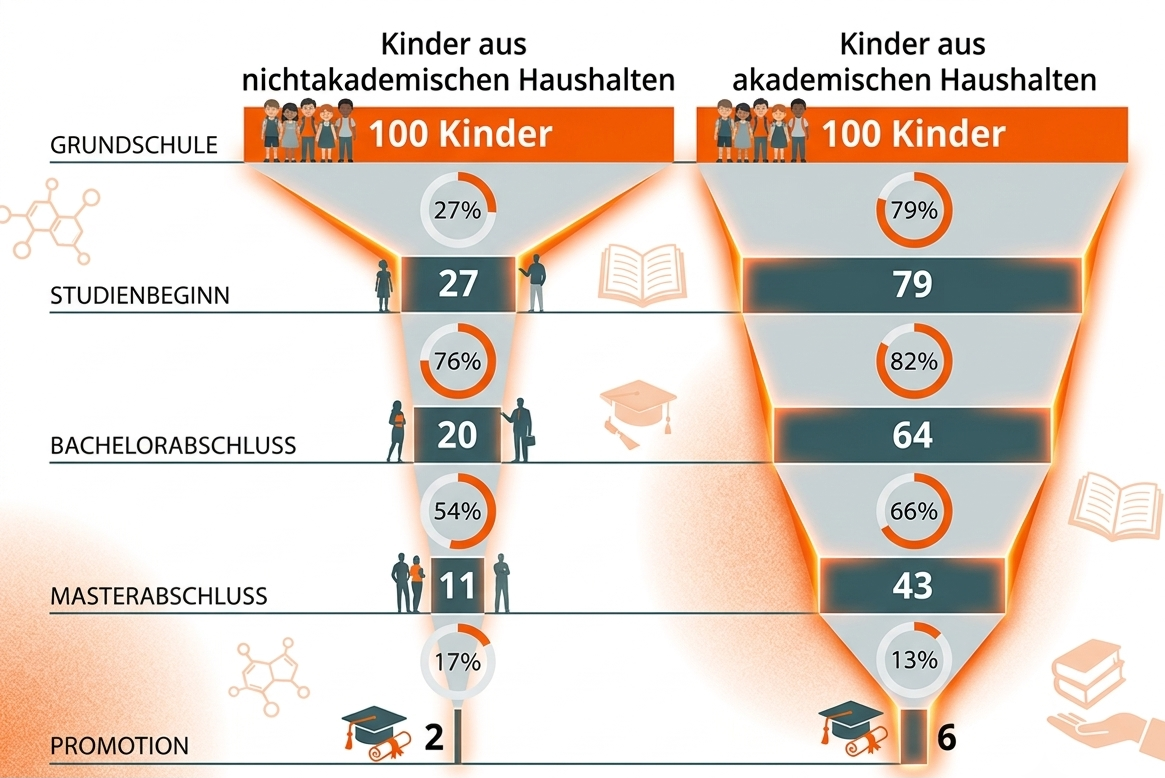
Christina Möller: The numbers speak for themselves. Of 100 elementary school students from households with parents who hold college degrees, 79 go on to college, 64 earn a bachelor’s degree, and 43 earn a master’s degree. Of 100 children from non-academic households, only 27 go on to college, and only 11 complete a master’s degree. Early selection after fourth grade and the multi-tiered nature of the school system play a decisive role here. They put children from non-privileged families at a disadvantage. Education researchers have been pointing out for decades that the system makes upward mobility difficult and favors children of college-educated parents. Want more numbers? Children from working-class families are two to three times less likely to receive a recommendation for a Gymnasium—even when they have identical cognitive abilities and reading skills. We are highly unjust, and this is a structural problem.
But the number of children from families where neither parent has a college degree who attend high school has been rising steadily in recent years …
Christina Möller: That’s true , but there are also many who leave school without a diploma. And the path to college and a degree remains unequal despite everything. On top of that, the privileged classes are now often turning to even more exclusive educational paths. Private schools are booming. The gaps between social classes have hardly changed. If anything, they’ve widened due to growing poverty.
I have one more cliché question: Do you really want to send everyone to college?
Christina Möller: It’s not about everyone going to college. But the choice of the right educational path shouldn’t depend on social background. There are many highly intelligent people whose potential isn’t being fully realized. This is unfortunate and unfair for them personally, and it’s a loss for society. After all, we need many well-educated people to learn from the various crises we face and to tackle the transformations ahead.
In your opinion, what needs to happen?
Christina Möller: We need the political will to make a bold move. Other countries show that inclusive school systems can work. Finland, other Scandinavian countries, and Canada have led the way. There, the school system has been restructured to allow for longer periods of learning together and to eliminate early tracking. That is exactly what Germany needs as well. This includes having enough teachers—of whom we already have too few—as well as social workers and psychologists in schools. Of course, the countries mentioned also face new challenges, such as those posed by migration and heterogeneous learning groups. But the fundamental principle remains: Our system is extremely selective. Among modern industrialized nations, Germany and Austria are the last to still sort students out so early.
Studying together for longer doesn't really sound that difficult. Why hasn't anything changed for years?
Christina Möller: Because it’s not just about educational issues, but also about power and class relations. Those who benefit from the system have little interest in changing it. Education is an important resource, and it helps pass on status and advantages to the next generation. This doesn’t always happen consciously, but it reinforces existing inequalities.
Do you see the political will to overhaul the education system?
Christina Möller: [shakes her head] On the contrary. There’s a lot of debate right now about cuts to social services. The gap between rich and poor continues to widen. And there is ample evidence that material poverty also contributes to educational poverty. The education system remains the neglected stepchild and is also underfunded. Not enough is being done to fundamentally improve it and reduce social inequalities.
I could really use some good news right now. Is there any message of hope?
Christina Möller: [laughs] Yes ! We know exactly what’s going wrong. That’s an advantage. If we honestly acknowledge that social background still matters far too much in the education system, we can talk about effective changes. My book aims to contribute to this: to make these inequalities visible and bring the debate out of the realm of abstraction. I want to show how closely education and social background are linked and why upward mobility through higher education is so rare and arduous. This isn’t just about numbers and statistics, but about life paths, emotions, and the question of who gets what opportunities in our society. We can no longer treat this as a marginal issue.
In your book, you also describe the social costs of educational mobility. What does that mean?
Christina Möller: Social advancement changes people. You learn a different, more academic language, often develop different tastes, and move in different social circles. This can lead to alienation from your family of origin or from friends. Many experience this as ambivalent: on the one hand, it’s a gain; on the other hand, it can make you feel very lonely. I also call this “habitual homelessness.” It’s also about class shame, fear, and changes in one’s sense of self.

Interview with Master's student Leonie Welzel
That sounds like a high price to pay for an education.
Christina Möller: Above all,it’s an enormous effort. People who have worked their way up often navigate multiple worlds and have to constantly switch gears—especially when there’s a huge social gap between their family background and their academic career. That’s stressful, but it’s also a skill. Those who are familiar with both worlds often possess a special sensitivity—for example, to exclusion and discrimination. Such experiences can be very valuable in positions of responsibility.
What role can the Fachhochschule Dortmund play in this context?
Christina Möller: The selection process that takes place after elementary school cannot simply be undone at a college or university. Nevertheless, there is much we can do to better support students. At Fachhochschule Dortmund, we have many students from lower socioeconomic backgrounds compared to traditional universities. That’s why it’s important to handle different educational backgrounds with sensitivity—for example, by working together to analyze texts and providing stronger support during their studies. This can make a big difference. We should raise awareness of this, because people who come from families of academics often find it difficult to understand the hurdles faced by students from lower socioeconomic backgrounds.
It might be helpful to take a look at your non-fiction book, published by Kohlhammer-Verlag. You can easily access it via the digital edition provided by the university library. (Click here to go directly to the book .) Thank you for the interview.
*The interview was conducted by Benedikt Reichel