

What will the city of tomorrow look like? Who will build it, and how will we address the enormous challenges of climate change, the housing shortage, and social transformation? For 20 years now, the inter-university master’s program “Urban Planning NRW” has been providing answers to these questions.
What makes it special is that five universities collaborate here to train architects, urban planners, and landscape architects to tackle the complex tasks of modern urban development—Fachhochschule Dortmund, Bochum University of Applied Sciences, the Technical Universities of East Westphalia-Lippe and Cologne, and the University of Siegen. For the Faculty of Architecture at Fachhochschule Dortmund, the study program is a flagship offering with a strong practical focus. “The master’s program offers a unique opportunity to delve deeply into the subject of urban planning across multiple universities,” emphasizes Prof. Christian Moczala, a lecturer in the Faculty of Architecture. Together with Honorary Professor Stephan Lenzen, he represents the Fachhochschule Dortmund in the master’s program.
“Urban planning is a broad field of work,” says Prof. Moczala. “Students benefit from a strong network and the combined expertise of five locations. The interdisciplinary and transdisciplinary approach we embody in this collaboration is exactly what our students will need in their future professional practice.” At the same time, the model strengthens Fachhochschule Dortmund’s position in the regional urban planning landscape.
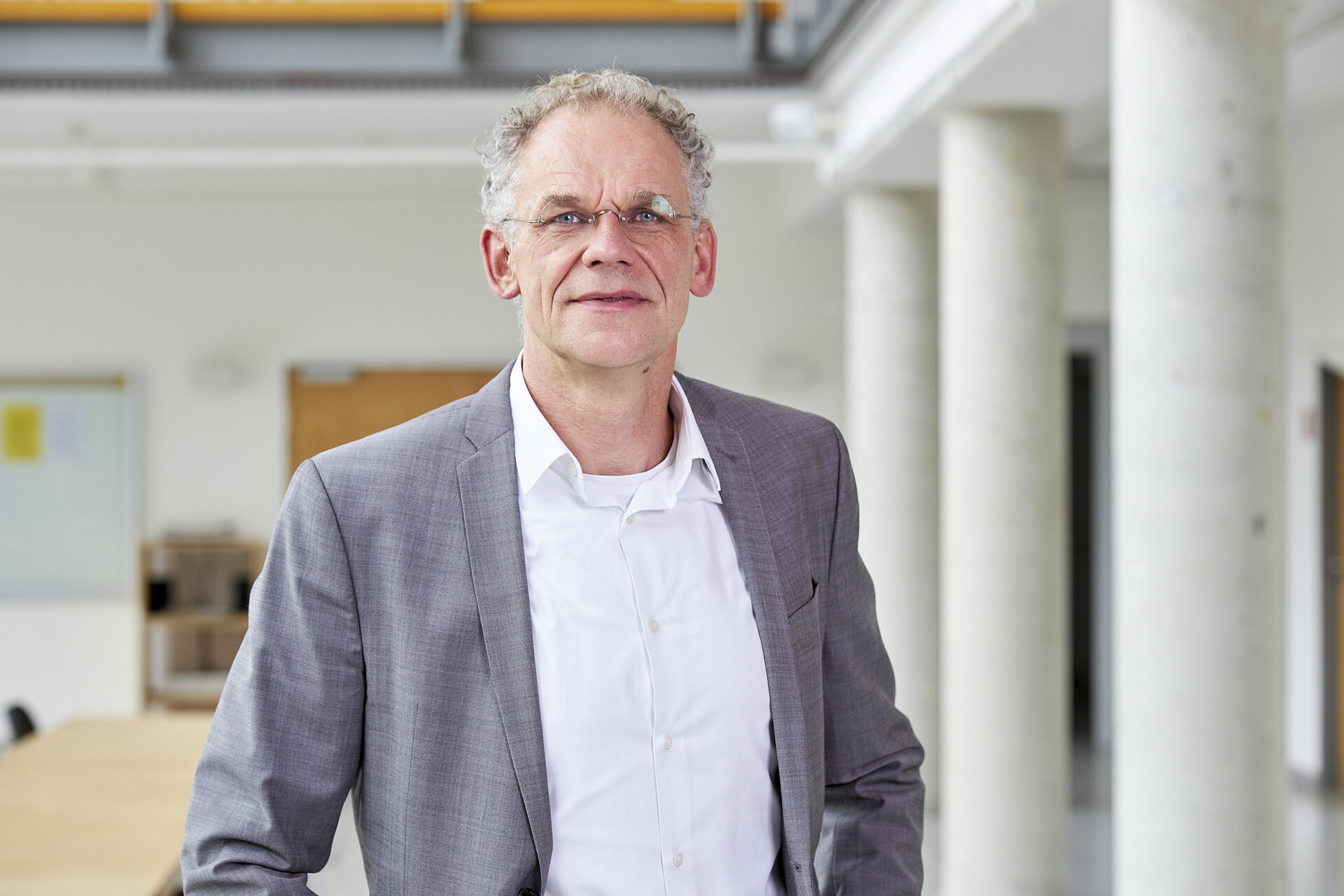
For students, the partnership also means excellent support. About 20 lecturers with diverse areas of expertise teach 20 to 25 students per class. “After 20 years, we can see just how sustainable this model is,” Prof. Moczala continues. “We’re not training theorists here, but rather doers who have learned to facilitate urban transformation processes in dialogue with society.”
"Learning from NRW" Anniversary Conference
To mark this milestone anniversary, a conference on interdisciplinary and transdisciplinary teaching titled “Learning from NRW” will take place on July 2 and 3, 2026, at the Kalk-Osthof halls in Cologne. The two-day program will address pressing issues for the future, such as the common good, urban practice, and climate challenges. In addition to presentations by experts, stakeholders from academia and the professional field will share their perspectives. “The conference is not a celebration of the past, but a deliberate look toward the future,” explains Prof. Moczala. “We want to discuss how we can make urban planning education even more progressive in order to meet the challenges of the coming decades.” Registration is still open.