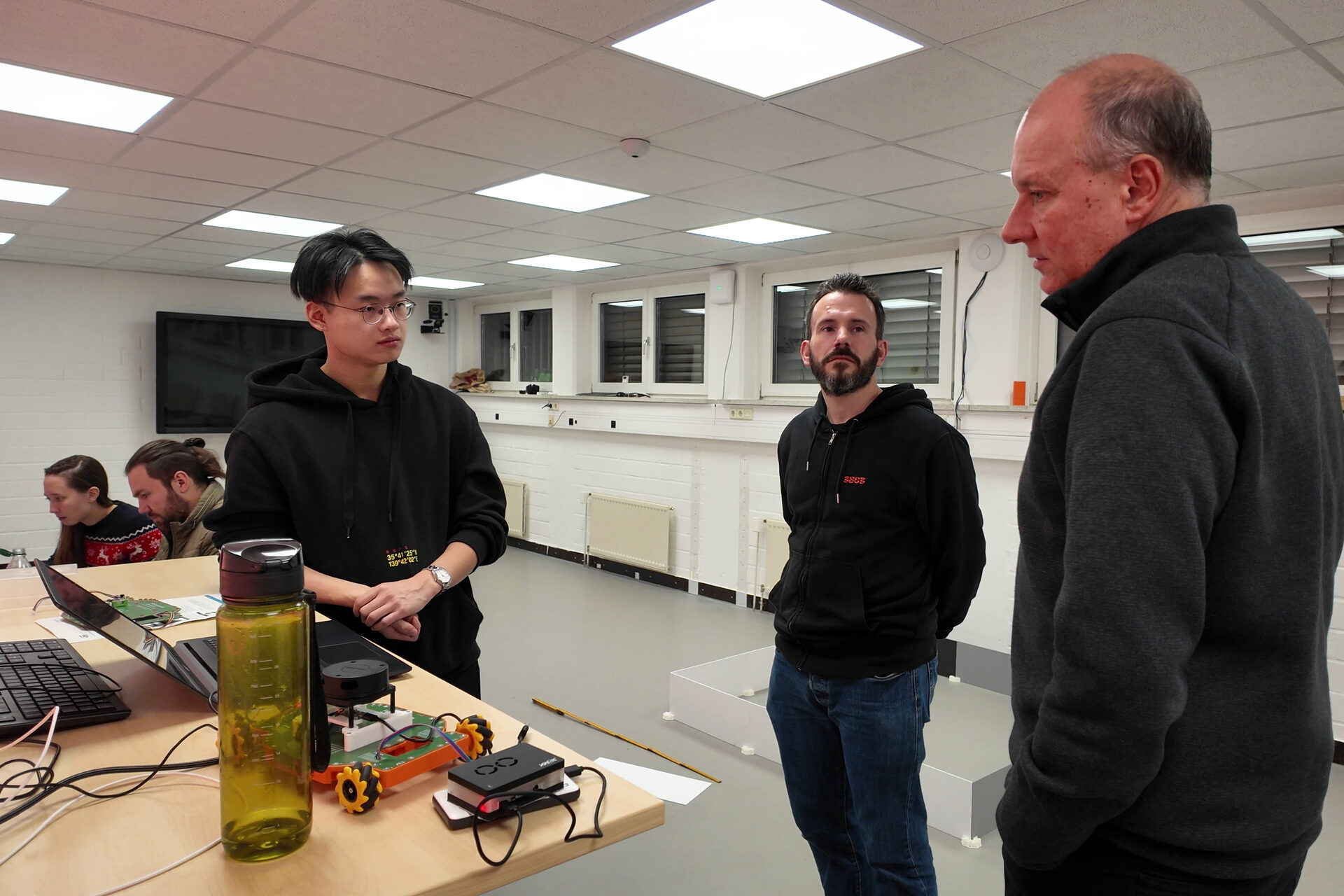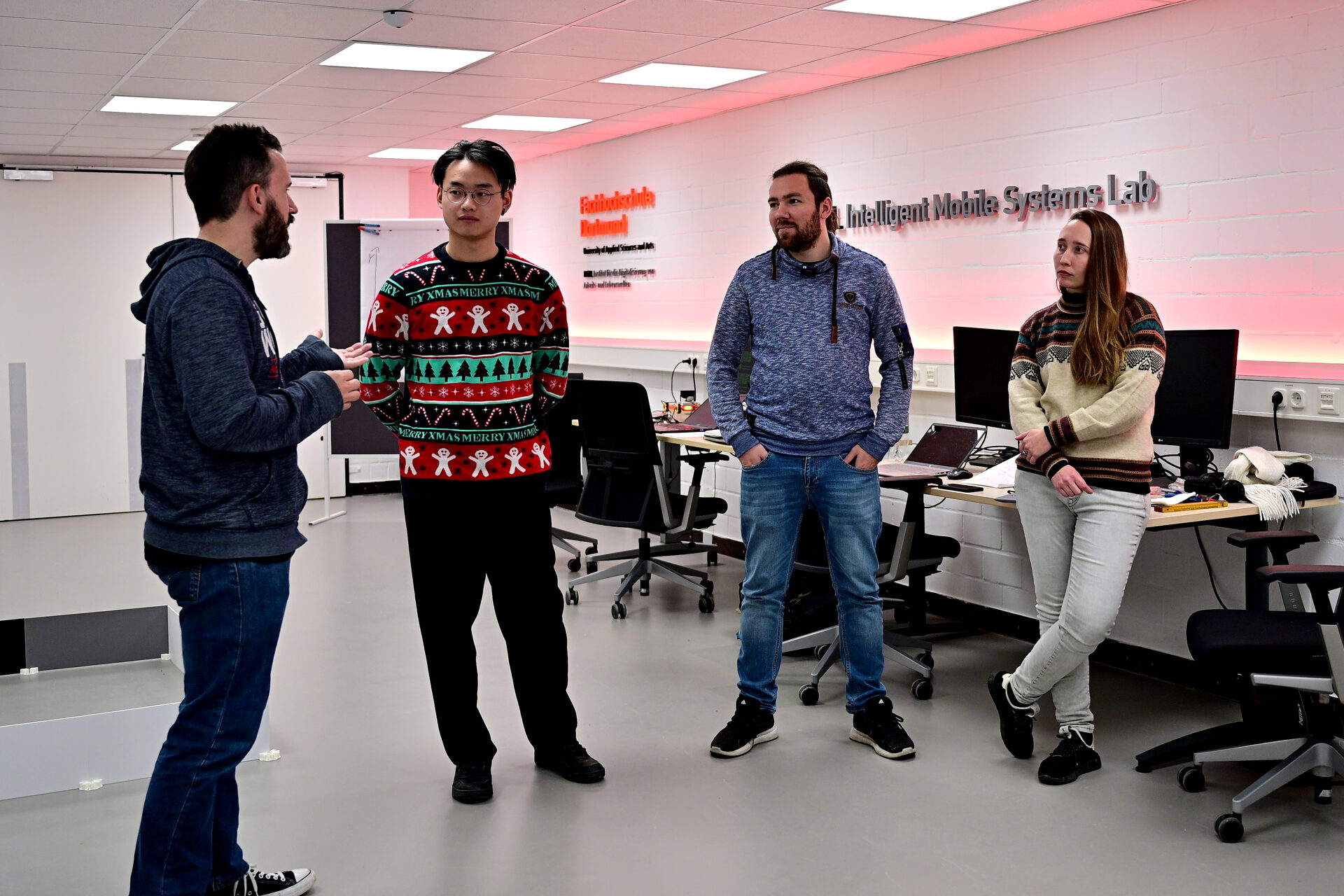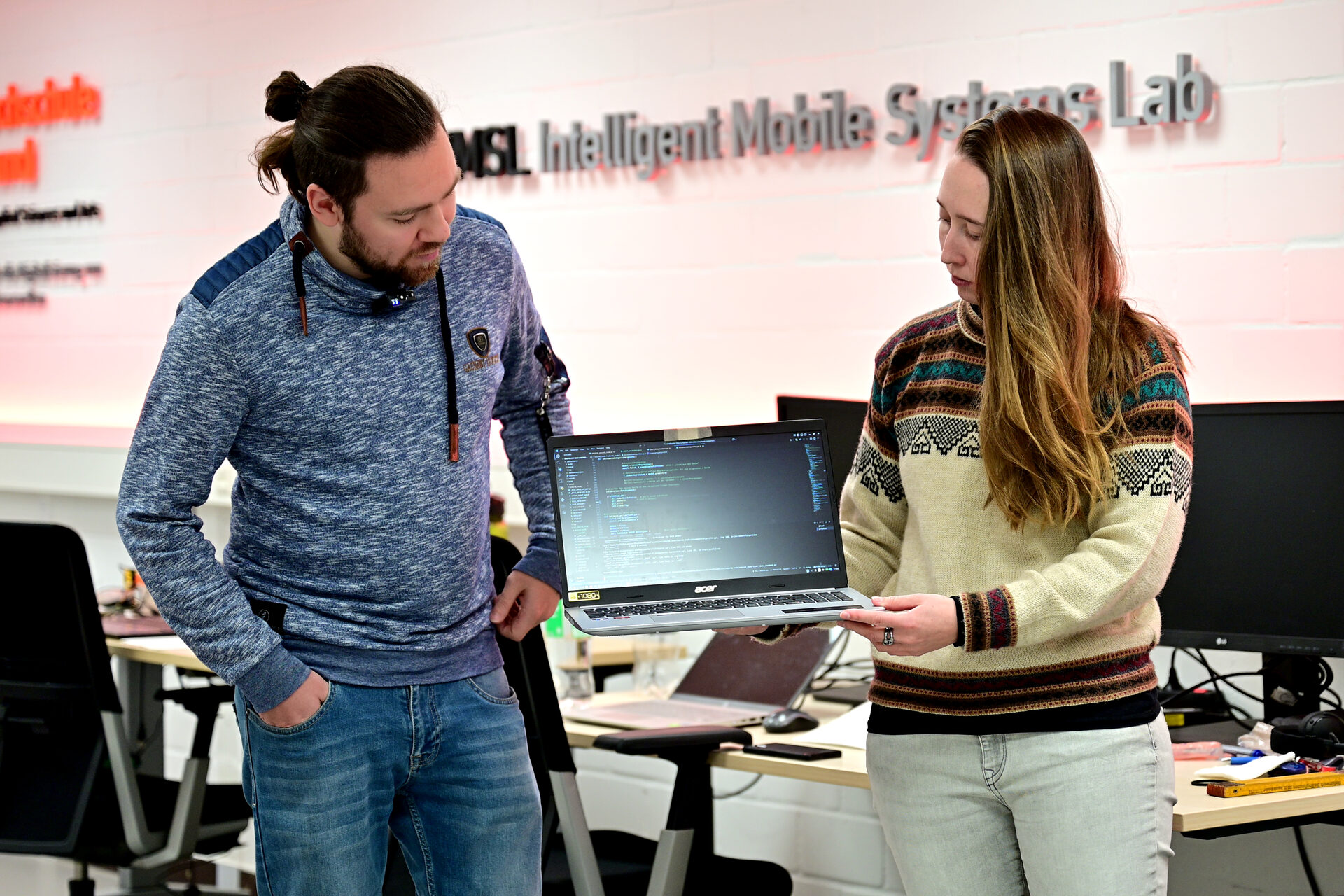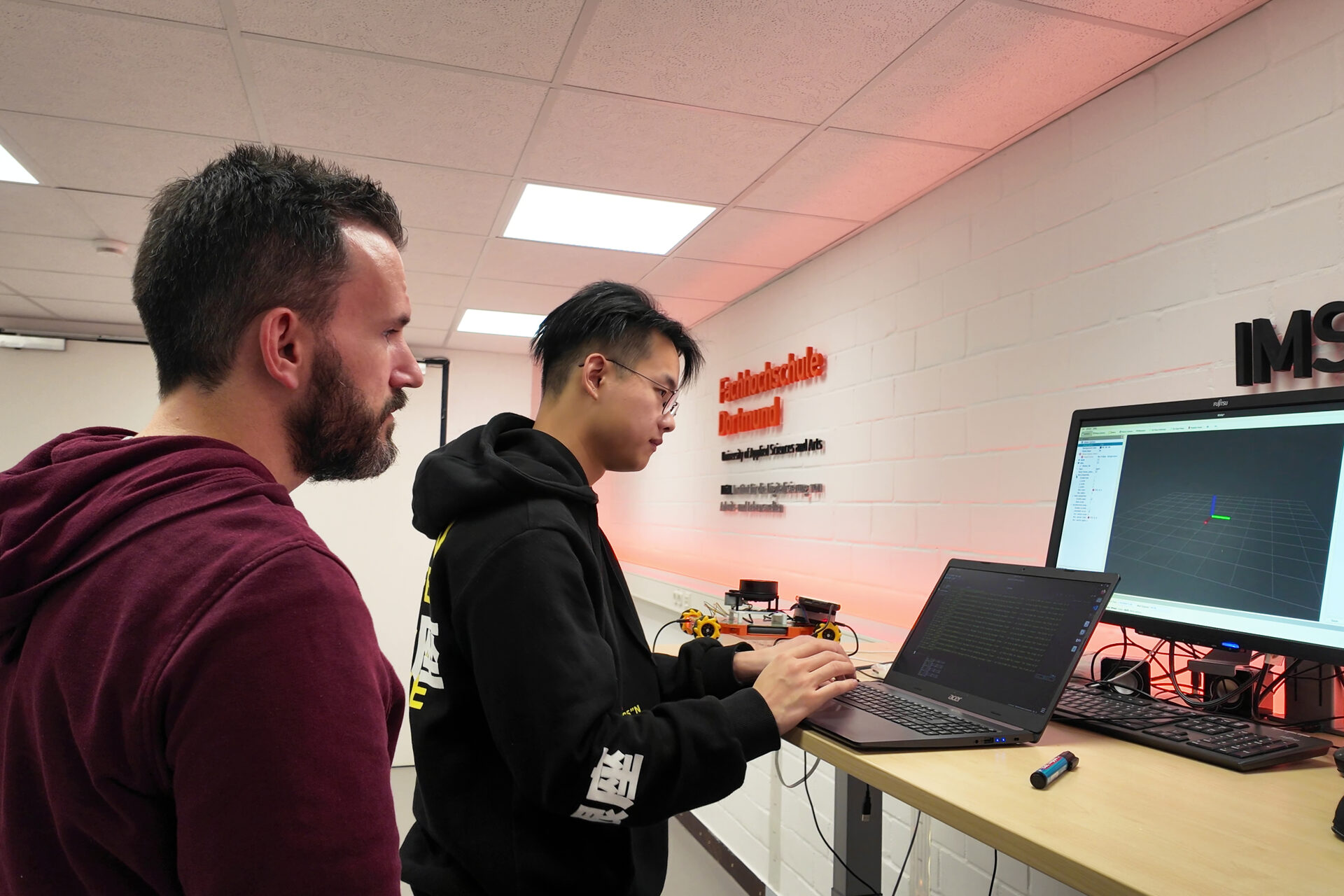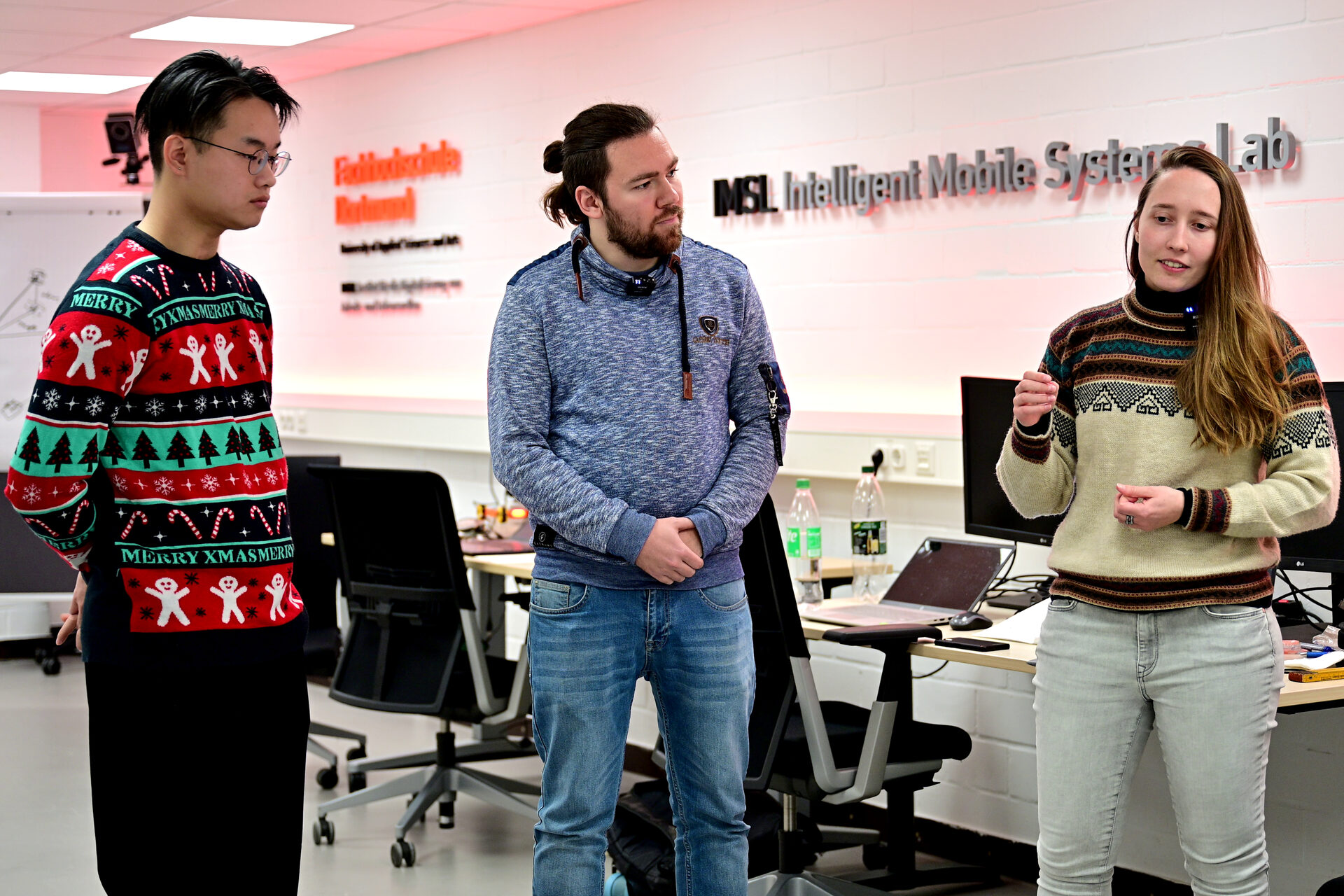

In November 2025, three Master's students from the Faculty of Computer Science took on a special challenge: as part of the block week for the "Autonomous Mobile Systems" module, led by Christof Röhrig and Daniel Heß, they developed methods for calibrating mobile robots in just five days.
Calibration of robot systems
When mobile robots have to perform a task, be it transporting objects, cleaning floors or exploring unknown environments, they often appear to be searching. These robots usually feel their way through their surroundings. This is often due to the fact that the robot drives are not (or no longer) calibrated accurately enough. As a result, the control software cannot rely on the robot moving in the way it was specified.
Slowly "approaching" the target is naturally inefficient and costs valuable time. This may still be acceptable for service robots, such as vacuum cleaning robots. However, if the robot is used to explore and map a location, for example, this delays a critical mission.
Consequently, the calibration of drives and sensors plays an important role in every robot application.
Theory meets practice
While many aspects that are important for the calibration of robots tend to be dealt with theoretically in lectures, the AMS block week offers Master's students in computer science the opportunity to work independently on the set task during an intensive week.
In the rooms of the IDiAL research institute, the lecturers are available for discussions and can guide the students with their experience from research projects.
Impressions from the block week